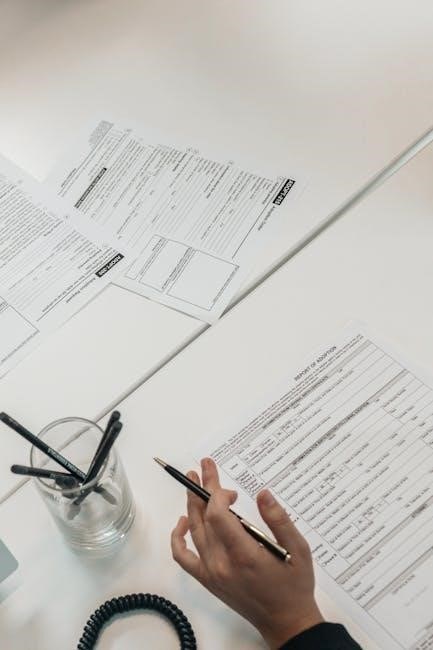
Free Rental Verification Form PDF: A Comprehensive Guide
Navigating the rental market often requires proof of a solid rental past; thankfully, readily available, complimentary PDF forms streamline this crucial process for all parties.
What is a Rental Verification Form?
A Rental Verification Form is a document used by landlords or property managers to confirm an applicant’s rental history with previous landlords. Essentially, it’s a request for information regarding a prospective tenant’s behavior and payment record at a prior residence. These forms typically request details like lease dates, monthly rent amount, whether rent was paid on time, and any instances of lease violations or property damage.
The form isn’t a contract, but a fact-finding tool. It helps landlords assess the risk of renting to a new tenant. A completed form provides valuable insight into a tenant’s reliability and responsibility. While often provided as a PDF for easy distribution and completion, the core purpose remains consistent: to gather verifiable information about a renter’s past performance. Utilizing a standardized form ensures consistent data collection for informed decision-making.
Why Landlords Need Rental Verification
Rental verification is a cornerstone of responsible tenant screening for landlords. It significantly minimizes the risk of renting to tenants with a history of late payments, property damage, or lease breaches. Verifying rental history helps protect the landlord’s investment and ensures a stable rental income stream.

Beyond financial security, verification contributes to a positive community environment. Problem tenants can disrupt other residents and lead to increased management costs. A thorough check provides peace of mind, knowing a prospective tenant has demonstrated responsible behavior in the past. Utilizing a free PDF form simplifies this process, making it accessible to landlords of all sizes. It’s a proactive step towards building a reliable tenant base and avoiding costly issues down the line.
Benefits for Tenants: Demonstrating Rental History
For tenants, a positive rental history is a valuable asset when applying for a new home. Utilizing a rental verification form, especially a free PDF version, allows you to proactively showcase your reliability and responsibility as a renter. It’s a chance to highlight consistent on-time payments and respectful treatment of previous properties.
Providing this documentation can be particularly beneficial for those with limited credit history or who are self-employed. It offers landlords concrete evidence of your ability to fulfill lease obligations. A completed form can expedite the application process and increase your chances of securing your desired rental. It demonstrates transparency and builds trust with potential landlords, setting you apart from other applicants.

Key Components of a Rental Verification Form
Essential elements within these documents include sections for tenant details, landlord contact information, rental period specifics, and a clear authorization for release.
Tenant Information Section
This crucial part of the form demands comprehensive details about the applicant. Typically, it begins with the tenant’s full legal name, ensuring accuracy for background checks and identification purposes. Following this, the form requests current and previous addresses, spanning at least the last three to five years, to establish a rental history timeline.

Crucially, the section also requires the tenant’s date of birth for verification and identification, alongside their contact information – a reliable phone number and email address. Some forms may also request the tenant’s Social Security number, though providing this is often optional and subject to privacy considerations.
Finally, a space is usually provided for the tenant to acknowledge the form’s purpose and to consent to the verification of the information provided, solidifying their agreement to the process.
Landlord/Property Manager Information
This section focuses on gathering details about the previous landlords or property managers who can vouch for the tenant’s rental behavior. It begins with the landlord’s or property manager’s full legal name and the name of the property management company, if applicable, ensuring clear accountability.
The form then requests the property address where the tenant resided, including apartment number, city, state, and zip code, for precise location identification. Crucially, it requires contact information – a phone number and email address – for easy verification and follow-up communication;
Often, a section asks about the dates of tenancy, establishing the duration of the tenant’s stay at the property. Some forms may also include a space for the landlord to indicate their relationship to the tenant (e.g., direct landlord, property manager).
Rental History Details
This pivotal section delves into the specifics of the tenant’s past rental performance, providing landlords with crucial insights. It typically begins with questions regarding the tenant’s payment history – were rent payments made on time and in full? Landlords are often asked to indicate if any late payments occurred and, if so, how frequently.
The form also explores the tenant’s adherence to lease terms, inquiring about any violations or breaches of the rental agreement. Questions may cover property damage, unauthorized pets, or excessive noise complaints.
Furthermore, landlords are usually asked to assess the tenant’s overall behavior – were they respectful of the property and neighbors? Would they rent to this tenant again? A space for additional comments allows landlords to provide any further relevant information.
Authorization & Signature
The Authorization & Signature section is legally vital, confirming the tenant’s consent for the landlord or property manager to release their rental history information. A clear statement outlining the scope of authorization is essential, specifying to whom information can be disclosed and for what purpose – typically, prospective landlords.
The tenant must carefully review this section before signing, understanding their rights regarding data privacy. A dated signature from the tenant signifies their informed agreement.
Similarly, the landlord or property manager providing the verification must also sign and date the form, attesting to the accuracy of the information provided. This signature acknowledges their responsibility for truthful representation. Without both signatures, the form is generally considered invalid and cannot be legally utilized.

Where to Find Free Rental Verification Form PDFs
Numerous online resources offer downloadable, no-cost rental verification forms; however, verifying source legitimacy and form comprehensiveness is paramount before utilizing any template.
Reputable Online Sources
Several trustworthy websites specialize in providing free legal and business forms, including rental verification templates. LawDepot, for instance, offers a customizable rental verification form that can be downloaded and used immediately. Similarly, Rocket Lawyer provides access to a variety of legal documents, with a rental verification form among them. These platforms often require a free account registration, but the access to forms is generally without charge.
Additionally, many property management software companies offer free downloadable forms as resources for landlords and tenants. Buildium and Rent Manager are examples of such companies. Government websites, specifically those related to housing or consumer affairs, can also be valuable sources. Be sure to check the website’s security and privacy policies before downloading any form to ensure your information remains protected. Always prioritize sites with clear terms of service and a good reputation.
State-Specific Forms (If Applicable)
While a general rental verification form is widely accepted, some states may have specific requirements or preferred formats for these documents. It’s crucial to determine if your state mandates any unique clauses or disclosures on rental verification forms. Certain states might offer their own official templates through state government websites or housing authorities.

Searching “[Your State] Rental Verification Form” online is a good starting point. Resources like the state bar association or department of consumer affairs may provide downloadable forms tailored to local laws. Using a state-specific form ensures compliance and minimizes potential legal issues. Remember that landlord-tenant laws vary significantly by location, so a generic form might not cover all necessary aspects in your jurisdiction. Prioritize state-specific options whenever available for optimal legal protection.
Avoiding Scam Websites
The internet offers numerous sources for free rental verification form PDFs, but caution is paramount. Scam websites often masquerade as legitimate providers, attempting to collect personal information or install malware. Always prioritize reputable websites known for legal forms and documents – look for secure (HTTPS) connections and clear privacy policies.
Be wary of sites demanding excessive personal details before allowing a download. A legitimate form request should not require your Social Security number or bank account information. Avoid clicking on suspicious ads or links promising “free” forms that lead to unfamiliar websites. Double-check the URL and website design for professionalism. If something feels off, trust your instincts and seek a form from a more trusted source. Protecting your data is crucial when downloading any document online.

Completing the Form: A Step-by-Step Guide
Successfully utilizing a free rental verification form PDF involves clear, concise completion by both tenant and landlord, ensuring all sections are accurately addressed.
Tenant’s Role in Completion
As the applicant, your primary responsibility is initiating the verification process and ensuring the form’s accuracy. Begin by carefully reviewing the PDF to understand all required information.
You’ll need to provide current contact details, dates of residency at previous properties, and potentially, the names and contact information for past landlords or property managers.
Double-check all entries for typos or omissions – even small errors can cause delays.
Most importantly, you must authorize the release of your rental history by signing and dating the form.
Consider providing multiple completed forms to expedite the process, especially if applying for several properties simultaneously.
Proactive communication with your previous landlords can also help ensure a swift and positive verification.
Landlord/Property Manager’s Responsibilities
Upon receiving a rental verification form, landlords and property managers have a crucial duty to respond promptly and truthfully. Your role involves accurately detailing the tenant’s rental history at your property.
This includes confirming dates of tenancy, the amount of rent paid, and whether the tenant consistently met their financial obligations.
Honesty is paramount; providing false or misleading information can have legal ramifications.
Clearly indicate if the tenant caused any property damage beyond normal wear and tear, or if there were any lease violations.
Maintain confidentiality and only disclose information relevant to the tenant’s rental history.
Ensure the completed form is signed and dated, and return it to the requesting party within a reasonable timeframe.

Ensuring Accuracy and Legibility
Accuracy is absolutely vital when completing a rental verification form PDF. Double-check all entered information – dates, amounts, addresses – to prevent misunderstandings or delays in the rental process.
Illegible handwriting can render a form unusable, so print clearly or utilize a typed version whenever possible.
If completing a physical form, use black or blue ink for optimal readability.
Avoid using abbreviations or jargon that might not be universally understood.
Review the completed form thoroughly before signing, ensuring all sections are filled correctly and consistently.
A meticulously completed form builds trust and demonstrates professionalism, benefiting both tenants and landlords alike.

Legal Considerations & Best Practices
Utilizing verification forms demands adherence to fair housing laws and data privacy regulations; responsible practices foster trust and mitigate potential legal complications.
Fair Housing Laws & Verification
Rental verification processes must strictly adhere to Fair Housing Laws, preventing discrimination based on protected characteristics like race, religion, national origin, familial status, or disability. Landlords should apply verification standards consistently to all applicants, ensuring objectivity.
Forms should never request information related to these protected classes. Focusing solely on verifiable rental history – payment consistency, property condition, and adherence to lease terms – is crucial.
Asking previous landlords about an applicant’s interactions with neighbors, or perceived lifestyle choices, can easily veer into discriminatory territory. Verification should be a factual assessment of rental performance, not a subjective evaluation of personal attributes.
Proper training for property managers and landlords regarding Fair Housing regulations is essential to avoid unintentional bias and legal repercussions when utilizing even a free rental verification form PDF.
Data Privacy & Security
When utilizing a free rental verification form PDF, prioritizing data privacy and security is paramount. These forms often contain sensitive personal information – Social Security numbers (though discouraged to be collected), dates of birth, and rental history details – requiring careful handling.
Landlords and property managers must implement secure storage methods for completed forms, both physical and digital. Encryption and password protection are vital for digital copies.
Tenants should carefully review the form’s stated data usage policies before signing. Understanding how their information will be stored, used, and potentially shared is crucial.
Avoid transmitting completed forms via unsecured email. Utilizing secure portals or encrypted file transfer methods minimizes the risk of data breaches. Compliance with relevant data protection regulations, like GDPR or CCPA, is also essential, even with a freely available PDF.
Alternatives to Traditional Verification
While free rental verification form PDFs remain a common method, several alternatives offer streamlined and often more reliable verification processes. Credit reporting agencies provide rental history data as part of tenant screening reports, offering a comprehensive overview.
Third-party tenant screening services, like TransUnion SmartMove or RentPrep, automate verification and background checks, reducing landlord workload and potential bias. These services often include eviction records and criminal background checks.
Experian RentBureau allows tenants to build credit through on-time rent payments, providing a verifiable record for future landlords. Open banking solutions are emerging, enabling direct verification of income and bank account details.
Ultimately, choosing the right method depends on individual needs and risk tolerance, but exploring these alternatives can enhance accuracy and efficiency beyond a simple PDF form.